
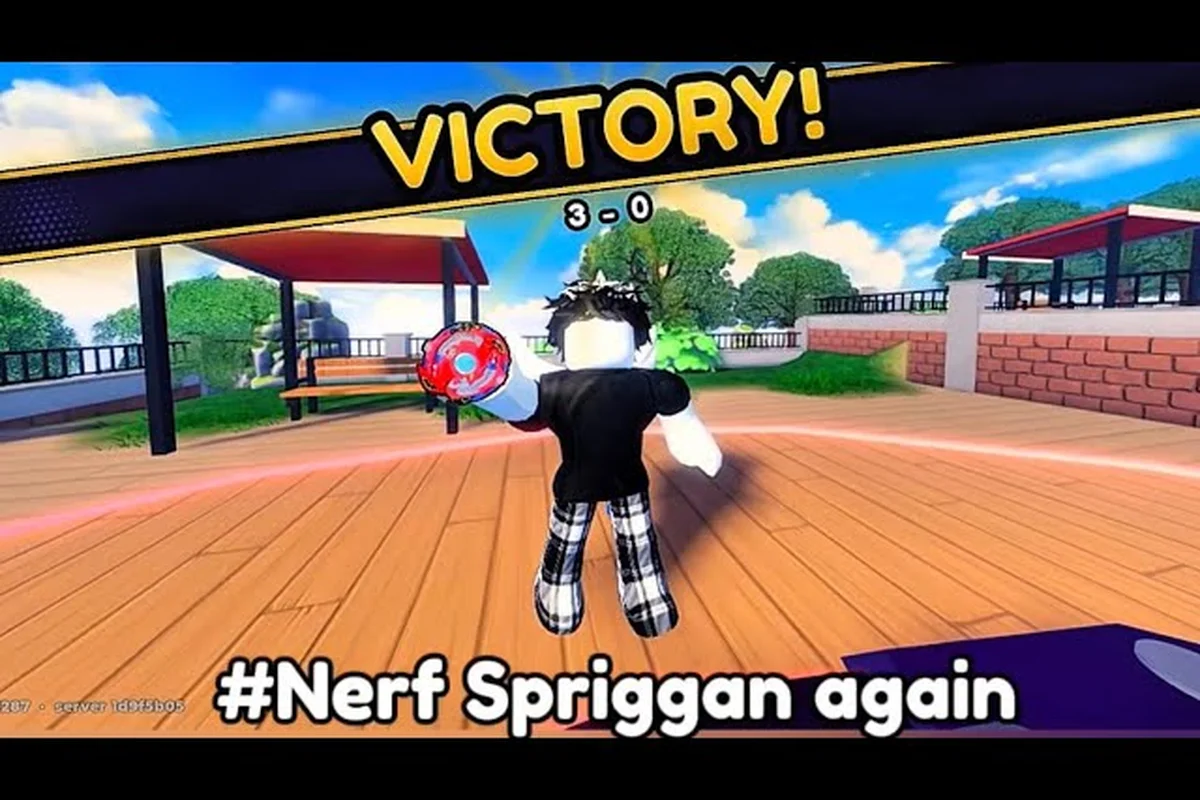
Bey Rivals vs Beyblade Burst is the comparison every spinning-top fan eventually makes, and the answer comes down to how each one handles customization, combat, and community. One is a licensed toy line turned video game franchise; the other is an unlicensed Roblox battler built by a small studio. Knowing where they overlap and where they split tells you exactly which one deserves your time.
According to a detailed comparison video on the topic, Bey Rivals vs Beyblade Burst, the two systems differ in their core mechanics, with Bey Rivals emphasizing a mobile-app-driven battle system while Beyblade Burst relies on physical tops and launchers.
Where Bey Rivals and Beyblade Burst Actually Diverge
The first thing to understand is that these are not the same kind of product. Beyblade Burst is a licensed franchise with official toy tie-ins, a published anime, and games backed by a large publisher. Bey Rivals is a Roblox experience developed by the group BBR Productions, and it is not officially licensed by the Beyblade IP. That single fact shapes everything downstream, from the roster to how fast the game changes.
Because there is no license, the Bey Rivals creators treat names like Spriggan and Rui as homage references rather than official characters. You get the feel of a burst-style battler without the legal baggage of a franchise contract. That freedom is precisely why the game can ship balance patches weekly and drop event content whenever the community asks for it.
The trade-off is polish and permanence. A licensed title tends to have a fixed roster and a slower, more deliberate content calendar. Bey Rivals moves fast, which means the meta shifts constantly and yesterday's dominant build can fall out of favor after a single patch.
| Feature | Bey Rivals | Beyblade Burst (licensed games) |
|---|---|---|
| Platform | Roblox (PC, mobile, console via Roblox) | Dedicated console/handheld releases |
| Licensing | Unlicensed homage, isOfficiallyLicensed=false | Official Beyblade IP license |
| Content cadence | Frequent patches, event codes, seasonal drops | Slower, fixed release schedule |
| Customization | Parts, surnames, traits, abilities | Toy-accurate combos, limited digital tuning |
| Developer | BBR Productions (Roblox group) | Large publisher studios |
That table is the honest summary: Bey Rivals wins on flexibility and update speed, while a licensed Burst game wins on authenticity and production value. Neither is strictly better — they scratch different itches.
What the Roblox Platform Changes
Running on Roblox is not a trivial detail. It means Bey Rivals inherits Roblox's cross-platform reach, so the same account works on a phone, a laptop, or a console. A 25-player server cap keeps matches snappy, and the low-friction install means you can be battling within minutes of discovering the game.
The flip side is that Roblox games live and die by their update rhythm. When a studio stops shipping, the player count drops. That is why the Bey Rivals developer leans so hard on seasonal windows and redeem codes to keep the arena populated.
Combat Mechanics: Burst Rules, Launch Timing, and Ring Outs
Both games share the same core win condition, and it is worth stating plainly: a Bey that burst-pops or gets knocked out of the arena loses the clash. Everything else is a matter of how you get there. Bey Rivals implements this with a physics-driven arena where launch angle, spin direction, and part weight all feed into the result.
Launch timing is the mechanic that separates casual players from consistent winners. A well-timed launch puts your Bey on the aggressive side of the arena and forces your opponent into a defensive spin. A sloppy launch does the opposite, and you spend the rest of the round chasing the fight.
Part types matter just as much. The game organizes parts into Attack, Defense, Stamina, and Balance, and each type pushes the physics in a different direction. Attack parts trade stability for burst pressure, Defense parts absorb hits but struggle to finish rounds, Stamina parts outlast opponents in long exchanges, and Balance parts sit in the middle.
| Part Type | Strength | Weakness | Best Use |
|---|---|---|---|
| Attack | High burst pressure, fast ring-out potential | Low stamina, unstable in long rounds | Aggressive openers |
| Defense | Absorbs hits, survives burst attempts | Slow to close out rounds | Counter-picking attackers |
| Stamina | Wins long attrition fights | Vulnerable to early burst | Grinding out tanky opponents |
| Balance | Flexible across matchups | Master of none | Learning the meta |
Surnames and traits layer on top of part types, adding throw-type modifiers and stat buffs. According to community testing, a trait that boosts spin retention can flip an otherwise losing matchup, which is why experienced players obsess over trait rolls before they worry about raw stats.
Reading the Opponent Before the Launch
Combat in Bey Rivals rewards information. Before the first launch you can often infer your opponent's build from their visible parts, and that read should shape your own loadout choice. If you see heavy Defense parts, swapping to Stamina gives you a favorable grind. If you see Attack parts, a Defense counter-pick blunts their burst window.
This pre-launch read is where the game feels most strategic, and it is a genuine point of difference from toy-driven play. In a licensed game you often commit to a combo before you know the matchup; here, the arena itself becomes part of the decision.
Customization Depth and the Progression Loop
Customization is the beating heart of Bey Rivals, and it is where the game most clearly beats a fixed-roster competitor. You do not pick a character and learn their kit — you assemble a Bey from parts, tune its traits, unlock abilities, and then push that build into a ranked ladder. The loop is build, test, refine, repeat.
Bey Points (BP) are the main currency, and they flow from arena battles. Spin Tickets, Lucky Spins, and Soul Tickets feed the part-rolling economy, so your progression is gated by how efficiently you farm and how wisely you spend. Players who blow tickets on every banner tend to plateau; players who save for a targeted rotation climb faster.
The Bey Points farming routine matters more than most newcomers expect, because a steady BP income is what lets you experiment with builds instead of being stuck with your first lucky pull.
| Progression Stage | Primary Goal | Key Resource |
|---|---|---|
| Early game | Build a functional first loadout | Starter parts, free codes |
| Mid game | Target a role (attack/defense/stamina) | Spin Tickets, BP |
| Late game | Refine traits and abilities | Soul Tickets, event drops |
| Endgame | Optimize for ranked matchups | Trait rolls, ability unlocks |
The depth here is real, but it comes with a learning curve. A licensed game usually hands you a curated roster with clear strengths; Bey Rivals hands you a pile of parts and expects you to figure out the synergies. That is either the best part of the experience or the most frustrating, depending on your temperament.
Abilities and the Build Ceiling
Abilities are the layer that pushes a good build into a great one. Unlocking the right ability for your part combination can turn a mid-tier loadout into a ranked contender, and the late game build guide breaks down which ability pairings actually hold up under pressure. The short version: match abilities to your part type rather than chasing raw numbers.
The Developer, Community, and Update Cadence
Here is where Bey Rivals vs other Roblox Beyblade games gets interesting, because the studio's behavior is the real differentiator. Bey Rivals is developed by BBR Productions, a Roblox group whose public page lists owner PyroZoku. As of late October 2026, the group had roughly 33.4K members and had reached Roblox Community Tier 3 on October 25, 2026.
That tier milestone is not cosmetic. Community Tier reflects group growth and engagement, and hitting Tier 3 signals that the player base is large enough to sustain regular events. The official Discord server, verified at around 9.8K members, hosts announcements, code drops, and support chat, and it is the fastest place to catch a balance change before it hits the live game.
The game itself launched on October 10, 2026, and by October 26 it had accumulated roughly 2.08 million visits, about 3.6K concurrent players, and 5.8K favorites. Those numbers describe a young but healthy Roblox title — not a runaway hit, but well past the point where it might quietly die.
| Metric (as of 2026-10-26) | Value |
|---|---|
| Group members | ~33.4K |
| Community Tier | Tier 3 (reached 2026-10-25) |
| Discord members | ~9.8K |
| Total visits | ~2.08M |
| Concurrent players | ~3.6K |
| Favorites | ~5.8K |
How Community Updates Reach Players
Because there is no official YouTube channel, Twitter/X account, Reddit subreddit, or standalone website, the Bey Rivals community updates funnel through exactly two places: the Roblox group page and the official Discord. That is a narrower channel than a licensed franchise would offer, and it means staying informed requires actually joining those spaces.
The community server details explain how to find both, and joining the group is also required before redeeming most in-game codes. If you want to track the studio's trajectory — including the planned-but-unconfirmed Boss Raids, Story Mode, and Tournaments that community members keep mentioning — the group page is where those conversations start.
Bey Rivals vs Other Roblox Beyblade Games
The Roblox ecosystem has no shortage of spinning-top battlers, so the fair question is not just how Bey Rivals compares to a licensed Burst title, but how it stacks up against its own platform peers. Most Roblox Bey games are small passion projects with a single developer, a handful of parts, and updates that slow to a crawl within weeks.
Bey Rivals differentiates itself through structure. It has a real currency system, a ranked ladder, a trait and surname layer, and a studio that is actively shipping patches. That combination is rare on Roblox, where most competitors never get past the "fun prototype" stage.
| Comparison Point | Typical Roblox Bey Game | Bey Rivals |
|---|---|---|
| Update frequency | Sporadic, often abandoned | Frequent patches and events |
| Currency system | Minimal or none | BP, Spin Tickets, Soul Tickets |
| Ranked ladder | Rare | Yes, with climb incentives |
| Trait/surname depth | Usually absent | Core build layer |
| Community hub | Often none | Group + Discord |
The honest verdict is that Bey Rivals is one of the stronger Roblox Beyblade-style games currently running, though "best" depends on what you value. If you want maximum depth and an active dev team, it is hard to beat. If you want a finished, polished product with no rough edges, a licensed title still wins.
Where the Game Still Has Room to Grow
The competitive scene is young, and tournament conversations currently happen on Discord rather than on any official esports page. Boss Raids and Story Mode remain community-mentioned and unconfirmed as of October 26, 2026, so treat any roadmap claim you see with healthy skepticism. The studio overview tracks what is confirmed versus rumored, which is the right way to read the developer's trajectory.
Frequently Asked Questions
Is Bey Rivals officially licensed by the Beyblade IP?
No. Bey Rivals is developed by BBR Productions and is not officially licensed by the Beyblade IP, so names like Spriggan and Rui function as homage references rather than official characters. That lack of a license is exactly what lets the studio patch balance and ship events far more frequently than a franchise title could.
How does combat in Bey Rivals compare to Beyblade Burst?
Both use the same core rule: a Bey that burst-pops or is knocked out of the arena loses the clash. Bey Rivals layers physics-driven launch timing, part types, and traits on top, giving players more mid-match control than a typical toy-accurate digital combo system offers.
What makes Bey Rivals stand out from other Roblox Beyblade games?
Structure. Most Roblox Bey games are small prototypes with minimal currency and no ranked ladder. Bey Rivals ships a full BP economy, Spin and Soul Tickets, a trait and surname layer, and a studio that updates regularly, which keeps the arena populated and the meta moving.
How do I keep up with Bey Rivals community updates?
Follow the Roblox group page and the official Discord server, since no official YouTube, Twitter, or Reddit presence exists. The Discord hosts announcements, code drops, and support chat, and joining the group is required before you can redeem most in-game codes.
Is Bey Rivals free to play?
Yes. Bey Rivals is free to play on Roblox, with progression driven by Bey Points earned in arena battles and Spin or Soul Tickets earned through play and events. Spending is optional, and disciplined players can build competitive loadouts without paying anything.
Final Comparison Takeaways
The bey rivals vs beyblade burst question does not have a single winner, because the two products are built for different players. A licensed Burst game delivers authenticity, polish, and a fixed roster you can master. Bey Rivals delivers flexibility, a deep customization loop, and a developer that ships changes fast enough to keep the meta alive.
If you value an active community, a ranked ladder, and the freedom to assemble your own Bey from parts and traits, Bey Rivals is the stronger pick among Roblox Beyblade-style games. If you want a finished, officially licensed experience with no rough edges, the franchise route still holds up. Either way, understanding the burst rule, the part types, and the update cadence is what separates a casual spin from a winning one.