
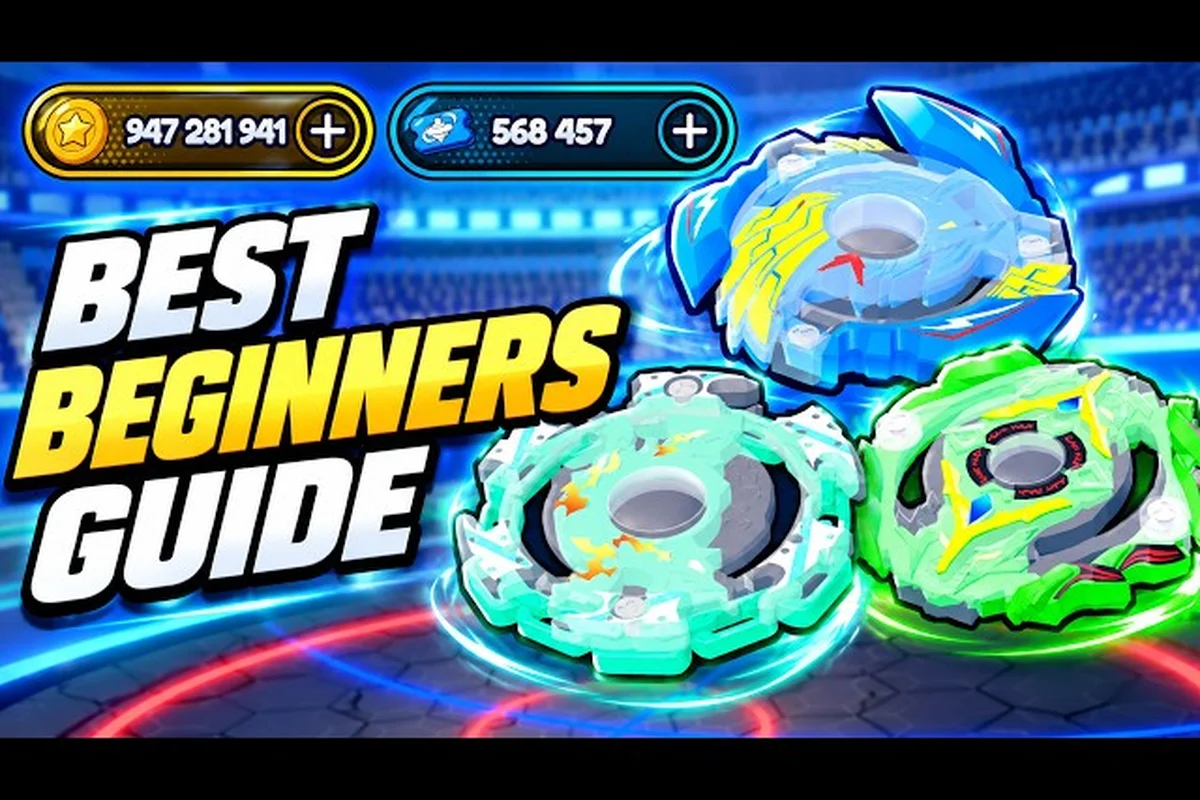
Every Bey you launch in Bey Rivals is only as strong as the parts bolted onto it, and understanding bey rivals all parts is the fastest way to stop guessing at your loadout. This catalog breaks down part types, rarity, and the stat checks that actually matter.
According to the official Bey Rivals Roblox page, the game's parts and mechanics are continually updated through official releases, so players should check the Bey Rivals Roblox page for the most current part stats and availability.
Bey Rivals Part Types Explained
Bey Rivals organizes every obtainable component into four functional families, and each family pushes your Bey toward a different win condition. The game's confirmed vocabulary is Attack, Defense, Stamina, and Balance, and a part's family is the single biggest signal of how it will behave once the launcher fires. Because the combat model is burst-style, a Bey loses the moment it burst-pops or gets knocked out of the ring, so your part mix decides whether you win by pressure, survival, endurance, or flexibility.
Attack parts lean into aggressive burst pressure, trading stability for the chance to crack an opponent open early. Defense parts soak hits and resist ring-outs, which keeps you alive through messy openings. Stamina parts stretch your spin time so you outlast opponents who burn energy fast. Balance parts blend traits from the other three, giving you a hybrid that rarely dominates a single axis but adapts to more matchups.
Community guides consistently describe the same core loop: gather parts through banner-style spins, tune a loadout, unlock abilities, then push into the ranked ladder. That means your part choices are not cosmetic — they are the mechanical backbone of every clash you take.
-
Attack — aggressive burst pressure, built to end clashes quickly
-
Defense — durability and ring-out resistance for grinding matches
-
Stamina — long spin time that wins by outlasting the opponent
-
Balance — hybrid stats that flex across multiple matchups
Surnames and traits layer on top of these families. Surnames act as family-line modifiers that grant buffs, and community reports describe them as separate from part stats and independent of rarity. The Trait Lab lets you assign traits that change how a part behaves, which is where two identical parts can start performing very differently.
How Part Families Shape a Clash
Because a burst-pop or ring-out ends the fight instantly, the family you stack determines your risk profile. A full attack spread can end a match in seconds or leave you exposed if the first hit whiffs. A defense-heavy build survives that opening and drags the fight into a grind. Stamina builds bet on the clock, and balance builds hedge against unknown opponents.
Attack and Defense Parts Compared
If you want to pressure opponents, attack parts are your engine, while defense parts are the brake that keeps you from flying out of the arena. The table below summarizes how each family behaves in practice, based on community testing rather than any official tier list, since the developers have not published numerical rankings.
| Part Family | Primary Goal | Win Condition | Main Trade-off | Best For |
|---|---|---|---|---|
| Attack | Burst pressure | Early burst-pop or ring-out | Fragile if the opener misses | Aggressive ladder pushes |
| Defense | Durability | Survive and counter | Slower to close matches | Grinding long fights |
| Stamina | Endurance | Outlast on spin time | Low burst damage | Patient, control play |
| Balance | Flexibility | Adapt per matchup | No dominant specialty | Mixed or unknown opponents |
Attack parts reward players who can read the launch and commit to a fast finish. Defense parts reward players who prefer to absorb the first exchange and punish overextension. Neither is strictly better — the meta shifts quickly because the game launched in the October 2026 window and receives frequent balance patches.
When you are choosing between these two extremes, look at your inventory's visible stats and quality rather than chasing a name you saw in a video. Part stats and quality are shown directly in the inventory, so you can compare two attack parts side by side and pick the one with the stronger base numbers for your build.
Reading Attack Part Stats
Attack parts usually carry the highest offensive ceiling in a loadout, but that ceiling only pays off if your launch is clean. Pairing an attack-type driver with a high-attack layer is the classic burst-finish recipe that community build videos keep returning to, because the two pieces reinforce the same goal instead of fighting each other.
Reading Defense Part Stats
Defense parts are the safety net. They reduce how often you lose to a single unlucky exchange, which matters enormously in a burst-style game where one ring-out ends everything. If you keep getting eliminated in the first few seconds, swapping one attack piece for a defense piece often stabilizes your results more than any other single change.
Stamina and Balance Parts in Practice
Stamina and balance parts are where patient players find their edge, and they are frequently underrated because they do not produce flashy instant wins. Stamina parts extend your spin time, so a match that would have ended in a quick burst instead becomes a war of attrition you can win. Balance parts borrow from every family, letting you react to whatever your opponent brings.
A budget-friendly approach that community guides recommend pairs common or early parts with a Stamina or Balance driver to win reliably without spending Lucky Spins. That advice holds up because stamina and balance parts tend to be more forgiving of imperfect launches, and they do not require a perfect opener to function.
| Build Style | Core Driver | Supporting Parts | Strength | Watch Out For |
|---|---|---|---|---|
| Attacker | Attack driver | High-attack layers | Fast finishes | Early ring-outs |
| Defender | Defense driver | Durability layers | Long survival | Slow kills |
| Stamina | Stamina driver | Endurance layers | Outlasting foes | Low burst |
| Hybrid | Balance driver | Mixed layers | Matchup flexibility | No specialty |
The budget build guide for new players walks through how to assemble a reliable stamina or balance setup from early parts, which is a smart starting point before you invest Lucky Spins into banner rolls. Once your fundamentals are solid, you can graduate to more specialized spreads.
Why Balance Parts Fit Unknown Matchups
Balance parts shine when you cannot predict your opponent. Because they carry a slice of attack, defense, and stamina, they rarely get hard-countered by a single strategy. The cost is that they also rarely hard-counter anyone else, so you win through consistency and adaptation rather than a single dominant trait.
Why Stamina Parts Win Grind Matches
Stamina parts turn short clashes into long ones, and long clashes favor the player who manages energy better. If your launch is steady and your opponent tends to overcommit, a stamina build converts that impatience into a win. It is a slower path, but a dependable one for players who dislike coin-flip openings.
Rarity, Quality, and Stat Checks
Rarity is the backbone of the part economy, and it scales from Common through Epic, Legendary, and Mythic. Higher-rarity parts generally carry stronger base stats, which is why banner rotation matters so much — the pool of obtainable parts changes with each banner, and seasonal banners add limited-event parts during Halloween-style windows. Legacy and limited parts remain equippable after their banner leaves, so nothing you earn becomes useless.
| Rarity Tier | Relative Base Stats | Typical Source | Notes |
|---|---|---|---|
| Common | Lowest | Early banners, starter rolls | Great for budget builds |
| Epic | Moderate | Standard banner pool | Solid mid-game filler |
| Legendary | High | Rotating and seasonal banners | Strong build anchors |
| Mythic | Highest | Limited-event windows | Rare, high-impact pieces |
Quality is a separate check from rarity. Part stats and quality are visible in the inventory, so you can inspect a part's actual numbers before committing it to a build. Two parts of the same rarity can differ in quality, which is why experienced players compare stats directly instead of assuming a higher rarity always wins.
Autosell rules protect your inventory during long rolling sessions by automatically selling duplicate parts that meet your thresholds. Setting sensible autosell limits keeps your inventory clean so you can spot the genuinely strong rolls. The top tier parts combos and rankings page is a useful reference for which combinations the community currently rates highest.
Using the Trait Lab
The Trait Lab is where a part's behavior can be reshaped. Assigning a trait changes how that part performs, so the same part can serve different roles depending on the trait you attach. Because traits are independent of rarity, a well-traited Common part can outperform a poorly-traited higher-rarity piece in the right build.
Checking Stats Before You Commit
Always open the inventory and read the actual numbers before locking a loadout. Community sources note that official numerical tier lists are not published, so builds rely on community-tested values. Treat any ranking you see online as a starting hypothesis, then verify it against your own inventory stats and match results.
Building a Loadout Around Your Parts
A complete loadout combines four rolling parts with a Bey identity, and the goal is to make every piece pull in the same direction. The table below is a practical planning checklist you can run before every ranked session.
| Check | What to Verify | Why It Matters |
|---|---|---|
| Family balance | Do your four parts share a goal? | Mixed goals dilute your win condition |
| Rarity spread | Are your anchors high rarity? | Higher rarity carries stronger base stats |
| Trait fit | Do traits support the family? | Traits change part behavior |
| Quality | Are stats strong for the tier? | Quality varies within a rarity |
| Rotation | Is a better part on banner now? | Banner rotation changes the pool |
Start by deciding your win condition, then fill the four slots with parts that serve it. If you want fast finishes, stack attack parts and accept the fragility. If you want consistency, blend stamina and balance so you never get hard-countered. The best abilities for attacker, defender, and stamina builds article explains how ability choices reinforce each of these directions.
Banner rotation is your long-term planning tool. Returning parts rotate back into the pool, and seasonal banners introduce limited-event parts, so checking the current banner before you spend Spin Tickets, Lucky Spins, or Soul Tickets prevents wasted rolls. Because the game launched in October 2026 and updates frequently, the meta shifts quickly — a build that dominates this week may need a tweak after the next patch.
Planning Around Banner Rotation
Treat each banner as a shopping window. If a part you need is currently obtainable, roll for it while it is available, because you never know when it will rotate back. If your target is not on banner, save your tickets and work with the parts you already own rather than gambling on a pool that cannot give you what you want.
Adjusting After Balance Patches
Frequent balance patches mean your loadout is never truly final. After a patch, re-check your core parts in the inventory, confirm your traits still make sense, and test a few matches before committing to a ranked climb. Small stat shifts can flip which family is strongest, so staying flexible is itself a skill.
Frequently Asked Questions
What are the part types in Bey Rivals?
Bey Rivals uses four confirmed part families: Attack, Defense, Stamina, and Balance. Attack parts push aggressive burst pressure, defense parts add durability, stamina parts extend spin time, and balance parts blend all three for hybrid flexibility. Surnames and traits layer extra modifiers on top of these families.
Do higher-rarity parts always perform better?
Not automatically. Rarity scales from Common to Epic, Legendary, and Mythic, and higher tiers generally carry stronger base stats, but quality varies within each tier. Because part stats and quality are visible in the inventory, you should compare actual numbers rather than assuming a higher rarity always wins a slot.
How do I get more parts?
Parts come mainly from banner-style spins funded by Bey Points, Spin Tickets, Lucky Spins, and Soul Tickets. Banner rotation changes which parts are obtainable, and seasonal banners add limited-event parts during Halloween-style windows. Legacy parts stay equippable after their banner leaves, so nothing you earn is wasted.
What is the best part setup for a new player?
Community guides suggest pairing common or early parts with a Stamina or Balance driver to win reliably without spending Lucky Spins. That combination is forgiving of imperfect launches and does not require a perfect opener, making it a dependable foundation before you invest in specialized attack or defense spreads.
Can I change how a part behaves?
Yes. The Trait Lab lets you assign traits that change how a part behaves, and traits are independent of rarity. That means a well-traited Common part can outperform a poorly-traited higher-rarity piece in the right build, so trait assignment is worth planning alongside your part choices.
Final Thoughts on the Full Parts Catalog
Understanding bey rivals all parts comes down to three habits: know your four part families, check rarity and quality in the inventory before committing, and plan your rolls around the current banner. Attack parts win fast, defense parts survive, stamina parts outlast, and balance parts adapt — and the strongest builds pick one direction and commit to it.
Because the game launched in the October 2026 window and receives frequent balance patches, treat every loadout as a living setup rather than a permanent answer. Re-check your stats after patches, keep an eye on banner rotation, and let your own match results be the final judge. That approach keeps your Bey competitive no matter how the meta shifts.